
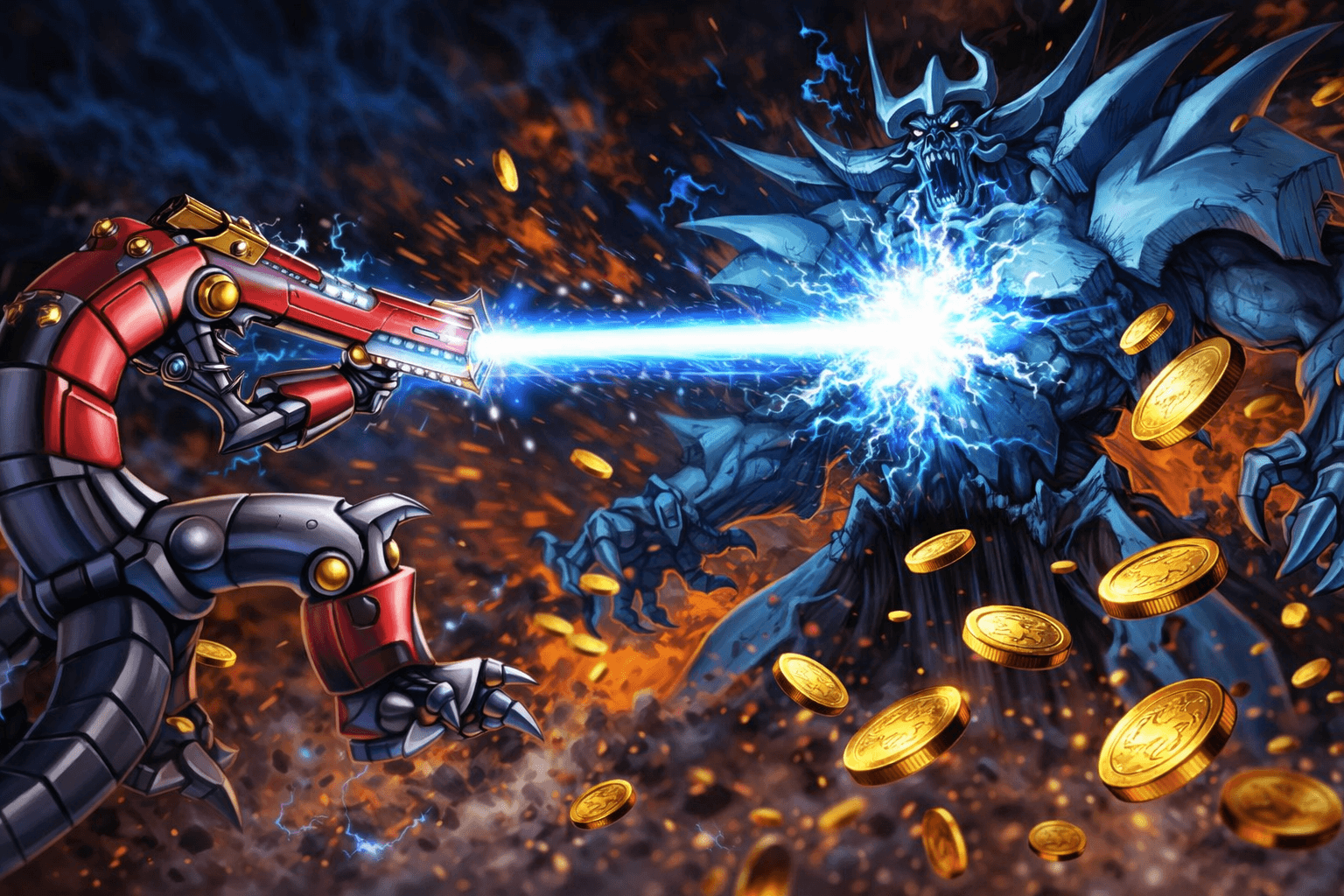
When Skill Meets Luck
GOAT Format is widely regarded as one of the most skill-intensive formats in Yu-Gi-Oh!. Decision-making, resource management, and consistency are the pillars that define competitive success. Players carefully plan their turns, minimize variance, and aim to maintain control over the flow of the duel.
However, not every card in the format follows these rules.
Hidden within the card pool is a small but fascinating group of cards built around one mechanic: coin flips. These cards introduce randomness into a format that otherwise heavily rewards predictability.
At first glance, they may seem gimmicky — or even outright bad. And in many cases, they are. But dismissing them entirely would overlook something important: a few of these cards can generate extremely high-impact plays, sometimes strong enough to rival top-tier strategies.
In this article, we will take a deep look at all coin flip cards in Goat Format, evaluate their actual competitive value, and understand why most of them are rarely played — while a select few manage to stand out.
What Are Coin Flip Cards?
Coin flip cards are effects that resolve based on chance, typically requiring the player to call or rely on a result between heads or tails.
In practice, this creates a fundamental problem:
- You cannot guarantee your plays
- You cannot reliably plan outcomes
- You introduce volatility into your own strategy
In a format like GOAT, where consistency is everything, this is a major drawback.
Most competitive decks are built to:
- Reduce randomness
- Maximize guaranteed value
- Avoid unnecessary risk
Coin flip cards do the opposite. They replace certainty with probability, and that alone is enough to make most players avoid them entirely.
However, not all coin flip cards are created equal. Some offer such powerful effects that they can justify the risk — at least in specific contexts.
Understanding the Risk–Reward Balance
To properly evaluate coin flip cards, we need to look beyond just their effects.
A card is not good simply because it has a strong effect — it must also be reliable enough to matter in real games.
This creates a simple framework:
- Low Risk + High Reward → Playable
- High Risk + Low Reward → Unplayable
- High Risk + High Reward → Situational
Most coin flip cards fall into the second category. Their effects are either too weak or too inconsistent to justify their inclusion.
But the interesting cases are those that manage to land in the third category — and occasionally even approach the first.
The Best Coin Flip Cards
These are the cards that actually have a place — at least situationally — in GOAT Format.
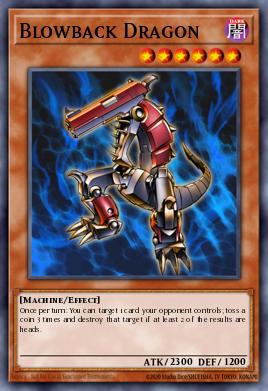
Blowback Dragon
Blowback Dragon stands out as one of the few coin flip cards that can genuinely be considered competitive.
While it relies on coin flips, its design minimizes the downside:
- It has solid stats for a Level 6 monster
- It only requires one tribute
- Its effect targets any card on the field, not just monsters
Over multiple turns, the probability works in its favor. Even if it fails once, it often succeeds eventually — and when it does, it generates immediate value.
Additionally, its synergy with Reasoning Gate Turbo gives it a natural home where its presence does not disrupt the overall strategy.
Why it works: Because even when it fails, it is still a playable body — and when it succeeds, it becomes removal.
Verdict: One of the few truly viable coin flip cards.
Jirai Gumo
Jirai Gumo is a perfect example of a card that looks risky — but performs better in practice.
At 2200 ATK for a Level 4 monster, it:
- Outs key threats like Blade Knight
- Pressures Warrior decks
- Forces immediate answers
The drawback — losing half your Life Points — is undeniably severe. However, in aggressive decks, this often becomes a calculated risk rather than a deal-breaker.
If Jirai Gumo connects even once or twice, it can generate enough pressure to justify its inclusion.
Why it works: Because its raw stats are already valuable, independent of the coin flip.
Verdict: High risk, but consistently threatening.
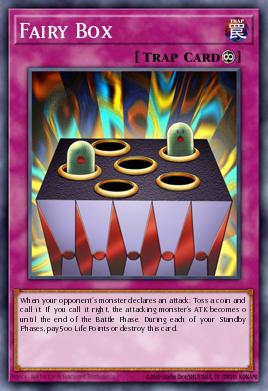
Fairy Box
Fairy Box is one of the most frustrating defensive tools available among coin flip cards.
When successful, it:
- Completely shuts down attacks
- Forces unfavorable trades
- Punishes aggressive opponents
The longer it stays on the field, the more value it generates. Opponents are often forced to remove it immediately — or risk losing control of combat entirely.
Its maintenance cost and inconsistency prevent it from being a staple, but its impact is undeniable.
Why it works: Because even one successful flip can swing the tempo of the duel dramatically.
Verdict: Extremely disruptive in the right matchup.
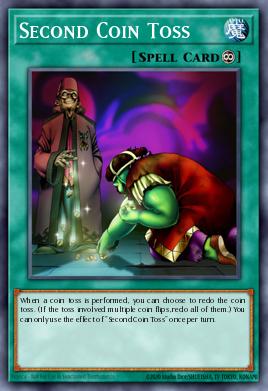
Second Coin Toss
Unlike the others, Second Coin Toss does not provide value on its own — it enhances other cards.
Its role is simple but important:
- It gives you a second chance
- It reduces variance
- It makes coin-based strategies playable
However, outside of dedicated coin flip decks, it does very little.
Why it works: Because it transforms unreliable effects into semi-consistent ones.
Verdict: Essential support card, not a standalone threat.
Mid-Tier Cards — High Impact, Low Reliability
These cards are powerful in theory — but too inconsistent to be trusted in competitive play.
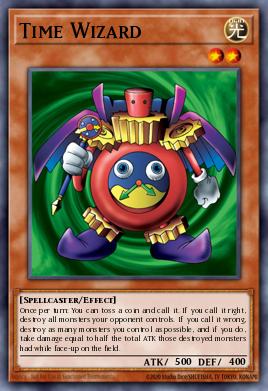
Time Wizard
Time Wizard represents the pure essence of coin flip design.
- Best case: you win the game on the spot
- Worst case: you lose control completely
There is no middle ground.
While its ceiling is incredibly high, its floor is equally devastating. A successful flip destroys all of your opponent's monsters, but a failed flip wipes your own board and chunks your Life Points. In a format where every card and every Life Point matters, this level of variance is difficult to stomach.
Verdict: Game-winning potential, but unreliable.
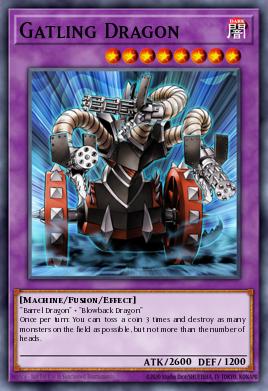
Gatling Dragon
Gatling Dragon is often summoned through Metamorphosis using a Level 7 monster.
It offers:
- Strong stats
- Potential multi-removal
However, its reliance on coin flips makes it less consistent than other Fusion options available in the format. When you could be summoning Thousand-Eyes Restrict or another guaranteed Fusion, choosing Gatling Dragon introduces unnecessary variance.
Verdict: Strong effect, but outclassed by more reliable options.
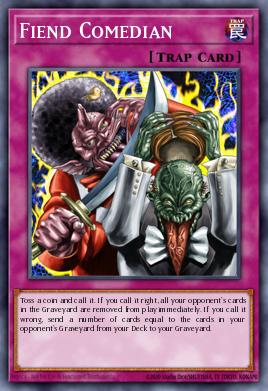
Fiend Comedian
Fiend Comedian is a highly volatile card.
- It can completely shut down graveyard-based strategies
- Or completely ruin your own game plan
In GOAT Format, where graveyard management is critical — fueling Black Luster Soldier - Envoy of the Beginning, Chaos Sorcerer, and recursion effects — this level of risk is extremely difficult to justify. The potential to accidentally mill yourself into a worse position makes this card a dangerous gamble.
Verdict: Too dangerous to rely on.
Why the Rest Are Not Played
The remaining coin flip cards fail for consistent reasons:
- Their effects are too weak even when successful
- Their conditions are too slow or impractical
- Their penalties are too severe
Cards like Goddess of Whim, Sand Gambler, and Kryuel simply do not offer enough value to compete with the consistency of standard GOAT staples.
In a format where every card must justify its inclusion, these fall short. A card that does nothing half the time — or worse, actively hurts you — cannot compete with staples like Sakuretsu Armor, Book of Moon, or Breaker the Magical Warrior, which deliver guaranteed value every single time they are played.
Coin Flip Card Pool (Full List)
Rather than functioning as a competitive deck, this list represents all coin flip-related cards available in GOAT Format. It serves as a reference point to understand the full scope of the mechanic and highlights just how limited — and often inconsistent — this pool really is.
🃏 Coin Flip Cards — Full Card Pool
Main Deck (14)
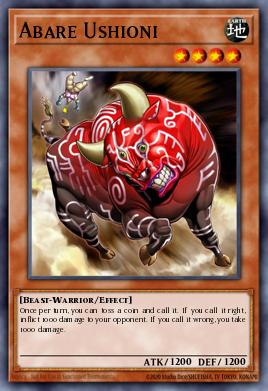
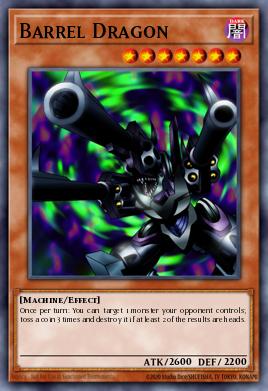
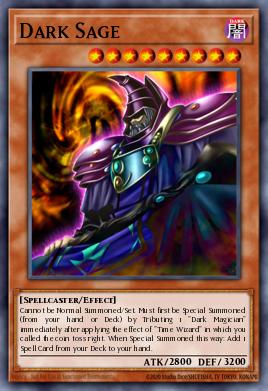
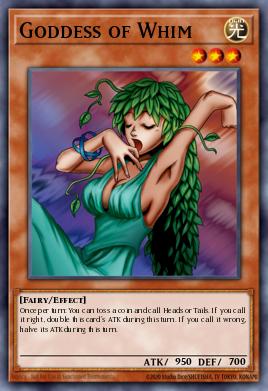
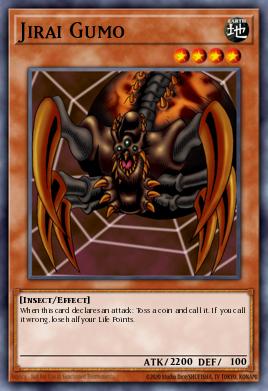
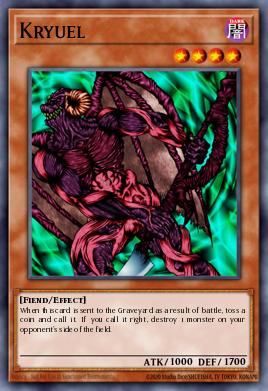
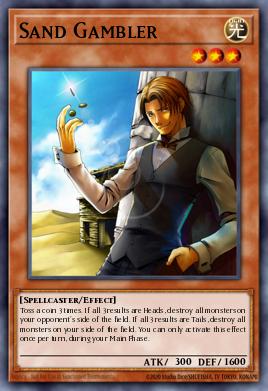
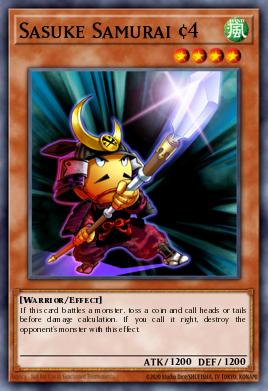
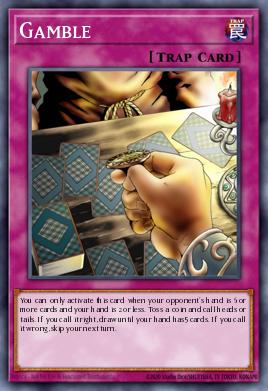
Extra Deck (1)
This collection showcases the entire spectrum of coin flip design in the format:
- A few cards with real competitive potential
- Several high-risk, high-reward effects
- And many that simply fall short due to inconsistency
Rather than being a deck you would bring to a tournament, this pool is best understood as a mechanical category — one that trades reliability for explosive, unpredictable outcomes.
Can Coin Flip Cards Be Competitive?
In most cases, no.
GOAT Format rewards:
- Stability
- Predictability
- Efficiency
Coin flip cards undermine all three.
However, a small number of them — particularly Blowback Dragon and Jirai Gumo — can function effectively within the right strategy.
The key is not to build around randomness — but to minimize its impact while maximizing its upside. A card like Blowback Dragon works not because of its coin flips, but because it is a solid tribute monster that happens to have a powerful bonus effect. Jirai Gumo works not because players enjoy gambling with their Life Points, but because 2200 ATK on a Level 4 body is simply too good to ignore in certain aggressive builds.
The lesson is clear: the best coin flip cards are the ones where the flip is a bonus, not the entire identity of the card.
Final Thoughts
Coin flip cards represent one of the most chaotic and unpredictable aspects of GOAT Format.
Most of them are rightfully ignored in competitive play — but a few stand out as legitimate tools when used correctly.
They remind us of something important: even in a format defined by skill and precision, there is still room for risk.
And sometimes, taking that risk is exactly what wins the game.