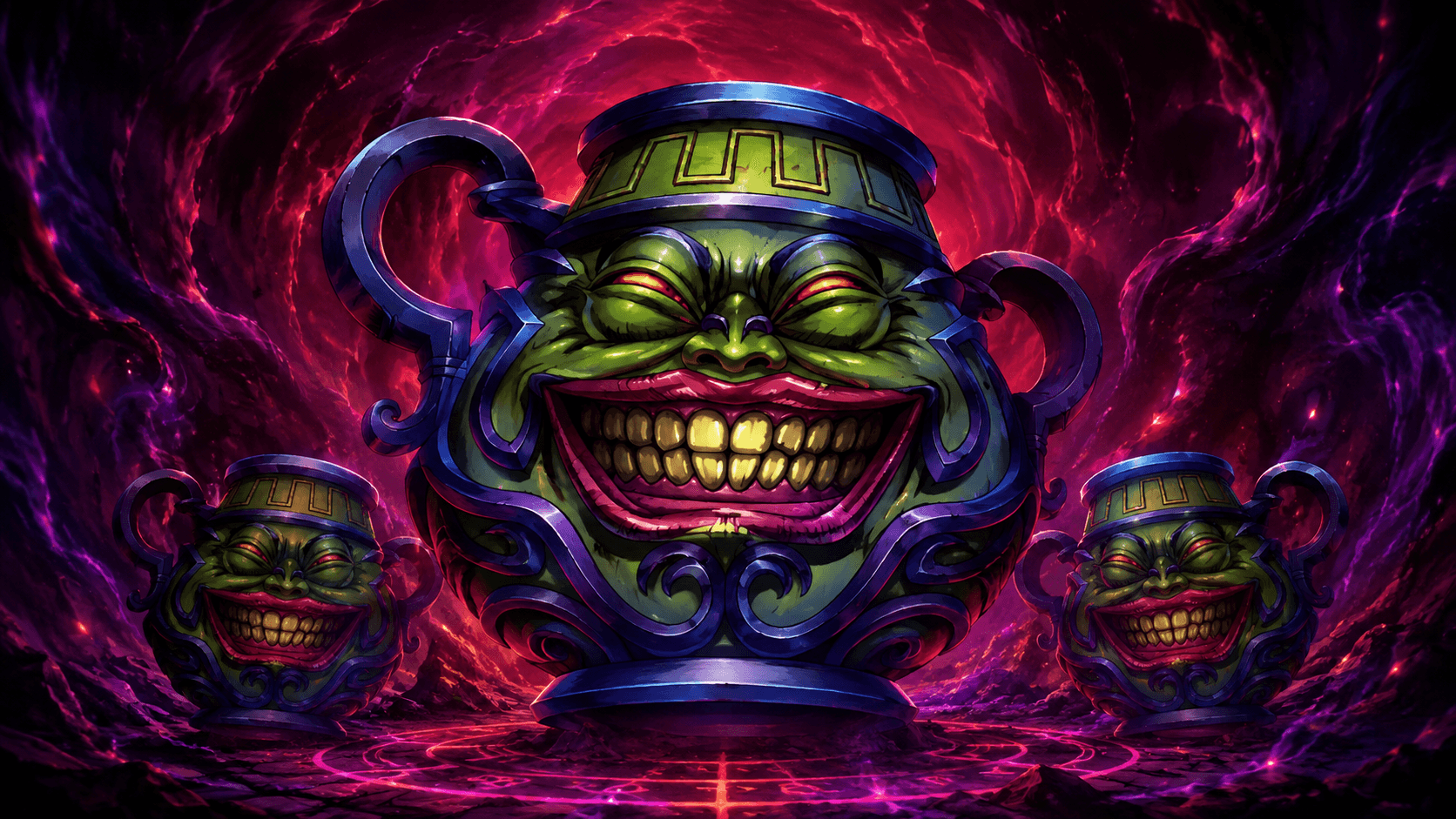
If you have spent any time in the Yu-Gi-Oh! retro format community, you have almost certainly heard the name "Edison." It appears in Discord servers, Reddit threads, YouTube thumbnails, and tournament announcements with increasing frequency. Edison format is the second-most popular retro Yu-Gi-Oh! format after Goat Format, and its growth over the past few years has been nothing short of remarkable. But what is Edison format, exactly? Why is it named after a city in New Jersey? What makes it different from both modern Yu-Gi-Oh! and Goat Format? And is it something you should be playing?
This guide answers every one of those questions. Whether you are a Goat Format veteran curious about the next era of retro Yu-Gi-Oh!, a modern player looking for a slower alternative, or someone who has never touched a Yu-Gi-Oh! card and wants to understand what all the fuss is about, this article covers the Edison format rules, the best decks in Edison format, the complete banlist, the legal card pool, where to play Edison format online, and how it compares to every other way of playing the game. By the end, you will know whether Edison is the format for you — and exactly how to get started if it is.
What Is Edison Format?
Edison format is a fan-maintained retro Yu-Gi-Oh! format that uses the card pool and banlist from March 2010, specifically the competitive environment surrounding the Shonen Jump Championship (SJC) held in Edison, New Jersey on March 27–28, 2010. The format freezes the game at this exact moment in competitive history: the March 1, 2010 Forbidden & Limited list, with a card pool that extends through The Shining Darkness (May 2010) — the boundary used by the official Edison format ruleset.
The Historical Context: SJC Edison 2010
The SJC Edison tournament is widely regarded as one of the most skill-intensive and diverse competitive events in Yu-Gi-Oh! history. The March 2010 format featured over a dozen competitively viable strategies, Synchro Summoning had matured into a deep and rewarding mechanic, and the power level of individual cards was high enough to create exciting games without being so overwhelming that matches devolved into coin flips. The top cut of SJC Edison featured Lightsworn, Blackwing, Gladiator Beast, Frog Monarch, Hero Beat, Machina Gadget, and several rogue strategies — a level of diversity that modern Yu-Gi-Oh! rarely achieves.
The tournament became a reference point for what many players consider the best state the game has ever been in outside of the Goat Format era. Community members began organizing games using the March 2010 banlist, and "Edison format" was born.
Why It's Called "Edison" Format
The name is straightforward: the format is named after the SJC Edison tournament that best represents the competitive environment of March 2010. Just as Goat Format takes its name from the Scapegoat token strategy that defined the April 2005 metagame, Edison format takes its name from the tournament venue that most perfectly captured the March 2010 meta. The community could have called it "March 2010 format" or "ABPF format," but "Edison" stuck because the tournament was genuinely exceptional.
When Did Edison Format Take Place?
Edison format represents the competitive Yu-Gi-Oh! environment of early-to-mid 2010. The legal card pool extends through The Shining Darkness (released May 2010 in the TCG), and the banlist is the March 2010 Forbidden and Limited List. This places Edison roughly five years after the Goat Format era (April 2005) and represents a dramatically different game — one with Synchro Monsters, Tuner monsters, and substantially more complex card interactions.
Edison Format Rules
Understanding the Edison format rules requires knowing both the general Yu-Gi-Oh! rules of the 2010 era and the specific differences from modern play. The game in 2010 was recognizably Yu-Gi-Oh! — the core mechanics of Normal Summoning, Spell/Trap activation, Battle Phase, and most other fundamentals were identical to what players know today. However, several critical rule differences existed that significantly impact gameplay.
How Edison Differs from Modern Yu-Gi-Oh!
The most fundamental difference between Edison format and modern Yu-Gi-Oh! is speed. Edison games typically last fifteen to twenty-five turns, with both players making meaningful decisions throughout. Modern Yu-Gi-Oh! games frequently end on turn two or three, sometimes turn one. Edison sits in a middle ground between the glacial pace of Goat Format and the explosive speed of modern play, offering complex decision trees without the feeling that the game ended before it started.
The Extra Deck in Edison contains only Fusion Monsters and Synchro Monsters. There are no Xyz Monsters (introduced in 2011), no Pendulum Monsters (2014), no Link Monsters (2017). This means the Extra Deck is a powerful resource but not the all-consuming engine that it became in later eras. You need Tuner monsters on the field to access your Synchros, which creates an inherent cost and planning requirement that modern Extra Deck mechanics largely eliminated.
Key Rule Differences
First Turn Draw. In Edison format, the player who goes first draws a card during their Draw Phase. Modern Yu-Gi-Oh! eliminated the first-turn draw to compensate for the massive advantage of going first with modern combo decks. In Edison, because the game is slower and going first is less decisive, the first-turn draw remains.
Ignition Effect Priority. This is perhaps the most significant and most misunderstood rule difference. In Edison format, the turn player has "priority" to activate an Ignition Effect of a successfully Summoned monster before the opponent can respond. This means that if you Normal Summon Brionac, Dragon of the Ice Barrier, you can immediately activate Brionac's effect to bounce cards before your opponent can activate Bottomless Trap Hole or Torrential Tribute. This rule was removed in 2012 and dramatically changes how Summons and monster effects interact. Priority creates deeper decision-making around when to Summon key monsters and fundamentally alters the risk-reward calculus of both players.
Damage Step rules. The Damage Step in Edison follows 2010 rules, which are more restrictive about what effects can be activated during it compared to modern Yu-Gi-Oh!. Most notably, only Counter Traps, mandatory effects, and effects that directly modify ATK/DEF can be activated during the Damage Step. This matters for combat-focused strategies and influences how battle-oriented cards interact.
Simultaneous Effects Go On Chain (SEGOC). The SEGOC rules in Edison follow the 2010 interpretation, which in most practical cases is similar to modern rules but has subtle differences in how turn player and non-turn player mandatory/optional effects are ordered on the chain.
The Edison Banlist
The Edison banlist is the March 2010 Forbidden and Limited List. This list was carefully designed by Konami for the competitive environment of its time, and the retro format community preserves it exactly as it was. Some notable entries:
Forbidden (cannot play): Dark Magician of Chaos, Cyber Jar, Magician of Faith, Tribe-Infecting Virus, Graceful Charity, Pot of Greed, Delinquent Duo, Snatch Steal, Harpie's Feather Duster, Imperial Order, Mirror Force, Ring of Destruction
Notice that several cards that are Limited staples in Goat Format — Pot of Greed, Graceful Charity, Delinquent Duo, Snatch Steal, Mirror Force, Ring of Destruction — are completely Forbidden in Edison. The power level has shifted: individual cards are less explosively powerful, but the overall complexity and strategic depth are higher.
Limited (one copy): Black Luster Soldier - Envoy of the Beginning, Dark Armed Dragon, Gorz the Emissary of Darkness, Honest, Plaguespreader Zombie, Brain Control, Cold Wave, Heavy Storm, Monster Reborn, Mystical Space Typhoon, Allure of Darkness, Crush Card Virus, Torrential Tribute, Bottomless Trap Hole, Solemn Judgment
The Limited list shows how the game had evolved — Mystical Space Typhoon was Limited to one copy (compared to its unlimited status in modern play), making backrow removal much scarcer and trap-heavy strategies viable.
Legal Card Pool and Sets
The Edison format card pool includes every TCG-legal set released up through The Shining Darkness (TSHD), released May 2010. This encompasses:
- All main sets from Legend of Blue-Eyes White Dragon (2002) through The Shining Darkness (2010)
- Structure Decks released through this period
- Special Edition and Promo cards available by May 2010
- Turbo Packs, Champion Packs, and other supplementary products
The card pool includes approximately 4,500+ unique cards — significantly larger than the Goat Format card pool of roughly 1,600 cards. This expanded pool is a major reason why Edison has such remarkable deck diversity. With thousands of cards available and a carefully designed banlist keeping the most degenerate strategies in check, the format supports over a dozen competitive archetypes and countless rogue strategies.
Sets are not legal if they were released after The Shining Darkness. This means Duelist Revolution and all subsequent releases are excluded, along with every OCG-only card that had no TCG printing by May 2010.
Edison Format vs Goat Format: What's the Difference?
This is the question that dominates retro format discussions, and for good reason. Edison format vs Goat format represents a genuine philosophical divide in what players want from Yu-Gi-Oh!. Both formats are excellent, but they offer fundamentally different experiences.
| Aspect | Goat Format (April 2005) | Edison Format (March 2010) |
|---|---|---|
| Era | 2005 — Classic Yu-Gi-Oh! | 2010 — Synchro era |
| Game Speed | Very slow (25-40 turns) | Moderate (15-25 turns) |
| Extra Deck | Fusions only (via Metamorphosis) | Fusions + Synchros |
| Card Pool | ~1,600 cards | ~4,500+ cards |
| Viable Decks | 5-8 competitive strategies | 12-15+ competitive strategies |
| Key Mechanic | Flip effects, resource grinding | Synchro Summoning, toolbox plays |
| Complexity | Deep but narrow | Deep and wide |
| Top Card | BLS - Envoy | Dark Armed Dragon |
| Cost to Build | $10-30 budget, $50-200 optimal | $30-60 budget, $80-250 optimal |
| Community Size | Larger, more established | Growing rapidly |
| Rules Differences | No Priority, no first-turn draw (from modern) | Has Priority, has first-turn draw |
| Learning Curve | Moderate | Steep |
Which Should You Play First?
If you are completely new to retro Yu-Gi-Oh!, Goat Format is the better starting point. Its smaller card pool makes it easier to learn, the slower game speed gives you time to think through decisions, and the community is larger with more resources available. Once you are comfortable with Goat Format fundamentals — resource management, chain resolution, reading the opponent — Edison format becomes a natural progression that adds Synchro mechanics and a vastly expanded strategic landscape.
If you are a returning player from the 2008-2012 era — someone who played with Synchros and remembers Blackwings, Lightsworns, and Gladiator Beasts — Edison might be the perfect re-entry point because you already understand the mechanics. Many Edison players are precisely this demographic: people who played competitively during high school and want to return to the game as they remember it.
If you already play Goat Format and want more variety, Edison is the obvious next step. The two formats complement each other beautifully — Goat teaches patience and resource management, Edison teaches tempo and toolbox decision-making. Most retro format communities, including GoatWorld, have players who enjoy both.
The Best Decks in Edison Format
Edison format deck diversity is legendary. Where Goat Format has approximately five to eight genuinely competitive strategies, Edison has twelve to fifteen or more. This Edison format tier list reflects the competitive landscape as understood by the community in 2026, informed by years of tournament data and evolving theory.
Tier 1: The Format-Defining Decks
Blackwing is arguably the most iconic Edison format deck and consistently performs at the highest level. The archetype combines aggressive monster swarming with powerful Synchro toolbox access. Blackwing - Sirocco the Dawn, Blackwing - Shura the Blue Flame, Blackwing - Bora the Spear, and Blackwing - Blizzard the Far North form the core of a strategy that can produce multiple Synchro summons in a single turn while maintaining card advantage through Black Whirlwind. Edison format Blackwing decks are aggressive, consistent, and have answers to virtually every situation through their Synchro Extra Deck.
Lightsworn uses the milling mechanic to fuel explosive plays. The deck sends cards from the deck to the graveyard through effects like Lyla, Lightsworn Sorceress and Charge of the Light Brigade, then capitalizes on the loaded graveyard with Judgment Dragon — a 3000 ATK monster that can destroy every other card on the field for 1000 Life Points. Edison format Lightsworn runs multiple Judgment Dragons and supplements the core with Honest for combat tricks, Lumina, Lightsworn Summoner for Synchro access, and Necro Gardna for defense. The deck is high-variance but devastatingly powerful when it goes off.
Vayu Turbo (sometimes called "Vayu" or "Dark Simorgh Turbo") is a dark-attribute focused strategy that uses Blackwing - Vayu the Emblem of Honor from the graveyard to Synchro Summon powerful monsters without the normal Synchro mechanic. Combined with Dark Armed Dragon, Dark Grepher, and Armageddon Knight, the deck produces explosive boards from minimal investment.
Tier 2: Highly Competitive
Gladiator Beast is a control strategy that "tags out" monsters during the Battle Phase to search the correct answer. Gladiator Beast Laquari, Gladiator Beast Darius, Gladiator Beast Bestiari, and Gladiator Beast Murmillo each provide different utility when tagged in, and the Contact Fusion monster Gladiator Beast Gyzarus destroys two cards when summoned. Edison format Gladiator Beast decks are methodical, skill-intensive, and reward deep matchup knowledge. The deck has a dedicated following among players who appreciate grinding advantages rather than exploding with combos.
Frog Monarch combines the recursion of Frog monsters — Swap Frog, Treeborn Frog, Dupe Frog — with the powerful Tribute Summon effects of Monarch monsters. Caius the Shadow Monarch banishes any card on the field, Raiza the Storm Monarch returns a card to the top of the owner's deck (a devastating tempo play), and Mobius the Frost Monarch destroys backrow. Treeborn Frog returns from the graveyard every Standby Phase if you control no Spells or Traps, providing a free tribute every turn. This engine is efficient, consistent, and incredibly difficult to stop once established.
Hero Beat uses Elemental HERO monsters — primarily Elemental HERO Neos Alius — with Gemini Spark and other support cards to create a beatdown strategy backed by excellent trap coverage. The deck is straightforward but effective, punishing opponents who stumble with aggressive 1900 ATK beaters and strong backrow.
Tier 3 and Rogue
Infernity uses a unique hand-size mechanic — many Infernity cards have effects that only activate when you have no cards in hand. The deck can produce powerful boards by intentionally emptying its hand, then chains multiple effects together. With The Shining Darkness support in the pool — including Infernity Barrier — the deck rewards precise sequencing and deep combo knowledge.
X-Sabers swarm the field with warrior-type monsters and leverage their Synchro access to produce aggressive boards. XX-Saber Faultroll Special Summons itself when you control two X-Saber monsters, enabling explosive turns.
Machina Gadget combines the consistency of Gadget monsters (each searches another Gadget when summoned) with Machina Fortress — a 2500 ATK monster that can Special Summon itself from the graveyard by discarding Machine-type monsters from hand. The deck is budget-friendly, consistent, and an excellent entry point for new Edison players.
Other rogue strategies include Quickdraw Dandywarrior (using Quickdraw Synchron and Dandylion for Synchro plays), Cat Synchro, Zombie Synchro, Chain Burn, Anti-Meta, and various creative builds that exploit the massive Edison card pool.
Budget-Friendly Edison Decks
The cheapest competitive Edison deck is Machina Gadget, which can be built for approximately thirty to fifty dollars using budget reprints. Gadget monsters are commons, Machina Fortress is inexpensive, and the trap lineup uses widely available cards. Hero Beat is similarly affordable. More expensive decks like Blackwing and Lightsworn cost sixty to one hundred dollars depending on card condition and rarity preferences, which is still a fraction of a competitive modern Yu-Gi-Oh! deck.
Key Mechanics: Synchro Summoning in Edison
If you are coming from Goat Format or from a time before 2008, Synchro monsters will be the biggest conceptual shift in Edison format. Understanding what Synchro monsters are and how they function is essential for competing in Edison.
What Are Synchro Monsters?
Synchro Monsters live in the Extra Deck (which in Edison is still called the "Fusion Deck" by some players, but functions identically to the modern Extra Deck). To Synchro Summon, you send one Tuner monster and one or more non-Tuner monsters you control to the graveyard. The combined Levels of the Tuner and non-Tuner(s) must exactly equal the Level of the Synchro Monster you are Summoning.
For example, a Level 3 Tuner + a Level 4 non-Tuner = a Level 7 Synchro Monster. A Level 2 Tuner + two Level 3 non-Tuners = a Level 8 Synchro Monster. The math must be exact — no more, no less.
Synchro Summoning is inherently a minus in card advantage (you give up at least two cards to summon one), which means the Synchro Monster must provide value that justifies the investment. The best Edison Synchros do this through powerful effects, high ATK, or both.
Important Synchro Monsters in Edison
Goyo Guardian (Level 6, 2800 ATK) — When Goyo destroys a monster by battle, it Special Summons that monster to your side of the field. This is absurdly powerful for a Level 6 Synchro and is one of the most common Synchro plays in the format.
Brionac, Dragon of the Ice Barrier (Level 6, 2300 ATK) — Discard any number of cards to return the same number of cards from the field to hand. Brionac is one of the most versatile cards in Edison, functioning as removal, combo enabler, and win condition. With Ignition Effect Priority, you can Synchro Summon Brionac and immediately activate its effect before the opponent responds.
Stardust Dragon (Level 8, 2500 ATK) — Tributes itself to negate and destroy a card or effect that would destroy a card on the field, then returns during the End Phase. Stardust is the premier defensive Synchro, protecting your established board from Heavy Storm, Torrential Tribute, and other mass removal.
Black Rose Dragon (Level 7, 2400 ATK) — When Synchro Summoned, can destroy all cards on the field. Black Rose is the nuclear option — when you are losing, Synchro Summon Black Rose to reset the game.
Colossal Fighter (Level 8, 2800 ATK + 100 per Warrior in any graveyard) — Revives itself when destroyed by battle. A persistent threat that demands specific removal.
Ally of Justice Catastor (Level 5, 2200 ATK) — Destroys any non-DARK monster it battles, before damage calculation. Catastor makes attacking into unknown face-down monsters safe and is devastating against LIGHT-heavy strategies.
How Synchros Change the Game vs Goat Format
The introduction of Synchro monsters fundamentally changes the texture of gameplay compared to Goat Format. In Goat Format, the Extra Deck is minimal — you access it primarily through Metamorphosis to produce Thousand-Eyes Restrict or fusion warriors. In Edison, the Extra Deck is a dynamic toolkit that you access every game, multiple times per game.
This creates a style of play sometimes called "toolboxing" — building your Extra Deck with a diverse range of Synchro monsters at different Levels and with different effects, then choosing which one to summon based on the current game state. A skilled Edison player might Summon Goyo Guardian to steal a monster in one game, Stardust Dragon to protect their board in another, and Brionac to bounce a problematic card in a third. The Extra Deck adds a layer of strategic depth that Goat Format doesn't have (and doesn't need — the formats provide different kinds of depth).
What Is Time Travel Edison?
Time Travel Edison (sometimes abbreviated "TTE" or "Time Travel") is a variant of Edison format that has gained significant popularity in recent years, particularly among players who want some of Edison's strategic depth but with a modified card pool.
Rules Differences from Standard Edison
In Time Travel Edison, the card pool receives targeted additions from later sets — typically cards that are considered "fair" and fill gaps in underrepresented strategies without breaking the format's balance. The specific additions vary by community, but common examples include TCG exclusives released shortly after the Edison cutoff and support cards for archetypes that were slightly underpowered in standard Edison.
The core rules remain identical to standard Edison: same banlist framework, same Priority rule, same first-turn draw. The difference is purely in which cards are available.
Why Some Players Prefer Time Travel
Time Travel Edison appeals to players who love the Edison metagame but want slightly more variety. By carefully adding select cards from post-TSHD sets, communities can support additional archetypes and provide existing decks with incremental tools that increase strategic options without fundamentally altering the format's identity.
The counterargument — and the reason standard Edison remains more popular — is that the March 2010 card pool exists as a complete, historically grounded, and thoroughly tested competitive environment. Adding cards from outside this window, even carefully selected ones, risks unintended interactions and moves the format away from its historical identity.
Both versions have active communities, and many players enjoy both. The distinction is worth understanding because you may encounter both versions in online tournament announcements, and it is important to know which card pool is being used.
Where to Play Edison Format Online
Finding Edison format games online is straightforward once you know where to look. Multiple platforms support Edison, and each has its own strengths.
DuelingBook
DuelingBook is a manual simulator that requires players to operate all game actions themselves — summoning, drawing, resolving effects, managing life points. This mirrors the physical card game experience and is popular among competitive players who value rules knowledge. DuelingBook has an Edison-specific rated ladder where you can queue for ranked games against other Edison players. The platform is browser-based, free, and requires no installation.
EDOPro / Project Ignis
EDOPro is an automated simulator that handles rules enforcement, effect resolution, chain ordering, and damage calculation automatically. This makes it the best platform for learning Edison format because the software prevents illegal plays and resolves complex interactions correctly. EDOPro requires a download but is free, open-source, and available on Windows, Mac, and Linux. You can create custom Edison banlist lobbies and find opponents through Discord communities.
Dueling Nexus
Dueling Nexus is a browser-based automated simulator similar to EDOPro. It offers ranked Edison format queues and casual matches without requiring any software installation. Dueling Nexus has a dedicated Edison playerbase and hosts regular community events.
GoatWorld Community
GoatWorld is primarily a Goat Format community, but many of its members also play Edison format. The Discord server includes discussion channels for retro formats beyond Goat, and the community's emphasis on competitive play and strategy discussion makes it an excellent resource for Edison players looking to improve. If you already play Goat Format on GoatWorld, you are one conversation away from finding Edison opponents.
Edison-Specific Communities
Edison Format Discord and edisonformat.net are the two largest dedicated Edison communities. Both maintain active Discord servers with ranked queues, tournament calendars, deck discussions, and comprehensive resources. If Edison is your primary interest, these communities should be your first stop.
How to Get Started with Edison Format
Getting into Edison format follows a clear path, whether you are a complete beginner, a Goat Format veteran, or a returning player from the Synchro era.
Step 1: Learn the Rules
Read the rules section above and pay particular attention to Ignition Effect Priority and the first-turn draw rule — these are the two differences from modern play that most frequently trip up new Edison players. If you come from Goat Format, you already understand basic chain mechanics and resource management; you mainly need to learn Synchro Summoning and Priority.
Step 2: Pick a Deck
For beginners, Machina Gadget or Hero Beat are the recommended starting points. Both are straightforward, affordable, and teach fundamental Edison concepts without requiring mastery of complex combos. Once you are comfortable with the format's rhythm, you can experiment with more complex strategies like Blackwing, Gladiator Beast, or Frog Monarch.
If you want the best deck in Edison format regardless of difficulty, Blackwing and Lightsworn are the tier 1 options. Blackwing is more consistent, Lightsworn is more explosive. Both reward practice and matchup knowledge.
Step 3: Play Online
Choose any of the platforms described above and start playing. EDOPro is best for beginners because automation handles rules enforcement while you learn. DuelingBook is best for experienced players who want a competitive environment. Both are free.
Play at least twenty to thirty games before forming strong opinions about the format or your deck choice. Edison reveals its depth gradually — your first few games will likely feel chaotic, but patterns emerge as you gain experience.
Step 4: Join a Community
Edison format thrives because of its community. Join the Edison Format Discord, browse the deck databases on edisonformat.com and Format Library, watch tournament coverage on YouTube, and engage with other players. The community is welcoming to newcomers and most experienced players are happy to answer questions, share deck lists, and help you improve.
Is Edison Format More Popular Than Goat Format?
As of 2026, Goat Format remains the larger community overall, with more established tournament circuits, more content creators, and more dedicated platforms like GoatWorld. However, Edison format has experienced faster growth over the past two years and is particularly popular among players in the twenty-to-thirty age range who grew up playing during the Synchro era and are now returning to the game.
The two communities overlap significantly. Many players enjoy both formats, and retro format Discord servers frequently host events for both Goat and Edison. The question of which is "more popular" matters less than the fact that both have thriving, active, and growing communities with regular competitive events. Neither format is going anywhere — both represent different golden ages of Yu-Gi-Oh!, and both offer competitive experiences that modern play cannot replicate.
Frequently Asked Questions
What is Edison format in Yu-Gi-Oh?
Edison format is a fan-maintained retro Yu-Gi-Oh! format using the March 2010 banlist and card pool (through The Shining Darkness). It is named after the SJC Edison tournament and features Synchro Summoning, Ignition Effect Priority, first-turn draw, and a metagame with over a dozen competitive strategies including Blackwing, Lightsworn, Gladiator Beast, and Frog Monarch.
What sets are legal in Edison format?
Every TCG-legal set from Legend of Blue-Eyes White Dragon (2002) through The Shining Darkness (2010) is legal, along with all Structure Decks, Special Editions, and promo cards released through May 2010. Duelist Revolution and all subsequent sets are not legal. The total card pool is approximately 4,500+ unique cards.
What is the best deck in Edison format?
Blackwing is generally considered the best overall deck in Edison format due to its combination of consistency, power, and versatility. However, Lightsworn and Vayu Turbo are equally capable of winning tournaments, and decks like Gladiator Beast and Frog Monarch are close enough in power level that pilot skill often matters more than deck choice. The Edison format best decks in 2026 remain largely the same as the historical metagame, though community theory continues to evolve.
What banlist does Edison format use?
Edison format uses the March 2010 Forbidden and Limited List exactly as it was published by Konami. Notable differences from Goat Format include Pot of Greed, Graceful Charity, Mirror Force, and Ring of Destruction being Forbidden (they are Limited in Goat), while cards like Dark Armed Dragon, Gorz, and Synchro-era staples are Limited.
Where can I play Edison format online?
DuelingBook offers rated Edison ladders, EDOPro provides automated gameplay with custom Edison banlists, and Dueling Nexus has browser-based ranked Edison queues. The Edison Format Discord community organizes regular tournaments on these platforms. All three platforms are free to use.
What is the difference between Edison and Time Travel Edison?
Standard Edison uses only cards from the March 2010 card pool. Time Travel Edison adds carefully selected cards from later sets to increase deck diversity while maintaining the format's identity. Both versions share the same core rules (Priority, first-turn draw). Standard Edison is more popular and historically grounded; Time Travel offers more variety.
Is Edison format more expensive than Goat Format?
Edison is moderately more expensive than Goat Format's budget options but still dramatically cheaper than modern Yu-Gi-Oh!. Budget Edison decks (Machina Gadget, Hero Beat) cost thirty to sixty dollars. Optimized tier 1 decks cost eighty to two hundred fifty dollars depending on card condition. Like Goat Format, Edison is a one-time investment that never rotates or loses value to power creep.
How is Edison format different from modern Yu-Gi-Oh?
Edison is slower (fifteen to twenty-five-turn games vs two to three turns for modern), uses only Fusions and Synchros (no Xyz, Pendulum, or Link), has Ignition Effect Priority and first-turn draw, and features a frozen card pool that never changes. The format rewards strategic decision-making over memorizing combo lines and offers more interactive gameplay where both players make meaningful choices throughout the game.
What are Synchro Monsters in Edison format?
Synchro Monsters are Extra Deck monsters summoned by sending one Tuner and one or more non-Tuner monsters from the field to the graveyard, where their combined Levels equal the Synchro Monster's Level. Key Synchros in Edison include Goyo Guardian (Level 6, steals destroyed monsters), Brionac (Level 6, bounces cards), Stardust Dragon (Level 8, protects from destruction), and Black Rose Dragon (Level 7, destroys everything).
Keep Reading
Continue exploring the world of retro Yu-Gi-Oh! formats:
- RBet Paris: A Nitro Vayu Report — Shiny Maul's two-day Edison tournament report and deck tech
- What Is Goat Format? Complete Guide — The grandfather of retro formats explained in depth
- Goat Control Deck Guide — See how the other retro format's best deck works
- Goat Format Banlist Explained — Compare Edison's restrictions with Goat's
- Goat Format Tier List 2026 — How Goat Format decks stack up against each other
- Where to Play Goat Format Online in 2026 — Platforms that also support Edison
- 5 Best Budget Goat Format Decks Under $30 — Budget deckbuilding for the other great retro format
- Yu-Gi-Oh! Retro Formats Guide — Every retro format compared: Goat, Edison, HAT, Tengu and more
- Global Rankings — See who's at the top of the Goat World leaderboard
Ready to play? Join the GoatWorld Discord — connect with retro format players who love both Goat and Edison, find opponents, and start competing.